
SBLC
The Economics of Trade Finance: How Liquidity, Risk and Regulation Shape Global Commerce
Author: Credit Glorious Team Published: December 2, 2025 Reading Time: 3 min --- International trade has always relied on trust, but in today's interconnected economy trust is no longer a handshake — it is a financial architecture. Goods move across borders faster than ever; cap
Credit Glorious Team · · 3 min read
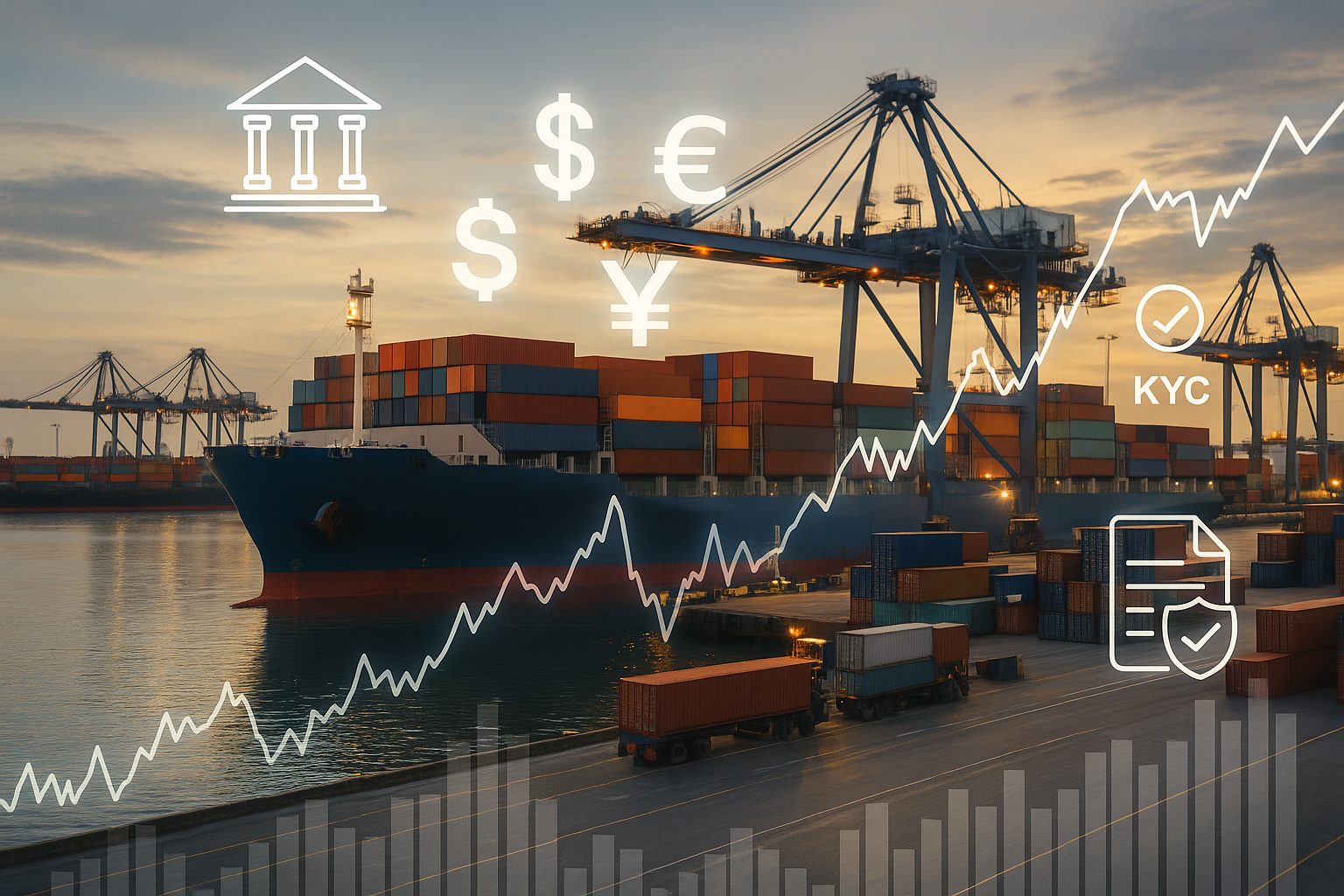
The Economics of Trade Finance: How Liquidity, Risk and Regulation Shape Global Commerce
Author: Credit Glorious Team Published: December 2, 2025 Reading Time: 3 min
International trade has always relied on trust, but in today's interconnected economy trust is no longer a handshake — it is a financial architecture. Goods move across borders faster than ever; capital moves even faster. What does not move quickly is confidence. Buyers must be certain that sellers will deliver. Sellers must believe that buyers will pay. Banks must ensure that both sides are who they claim to be. In the middle of this delicate balance sits one of the least discussed yet most essential engines of global commerce: trade finance.
Trade finance is often described as a set of instruments, but in reality it is something far deeper. It is the invisible infrastructure that allows globalisation to function without collapsing under operational and financial risk. Liquidity, regulation and counterparty confidence shape the world's supply chains just as much as logistics or manufacturing capacity.
Why Trade Finance Has Become a Strategic Asset for Companies
Over the past decade, regulation has redrawn the contours of global banking. Capital requirements tightened, compliance frameworks expanded, and traditional lenders became more selective. Many companies discovered that access to credit lines, guarantees or letters of credit was no longer automatic. Trade finance did not disappear — it became more technical, more international, and more dependent on specialist platforms capable of navigating new constraints.
This shift reshaped how companies operate. A supplier no longer ships goods without financial backing. A contractor no longer signs an EPC agreement without documented guarantees. A commodity trader cannot rely solely on trust to move millions of dollars of goods across borders. In this environment, the ability to secure a structured, compliant trade finance solution determines who can operate confidently in global markets and who cannot.
How Credit Glorious Fits Into the Modern Trade Finance Landscape
Credit Glorious acts not merely as a facilitator but as an orchestrator. Coordinating banks, SWIFT messages, risk checks and contractual requirements, the firm bridges the gap between corporate demand and the stringent expectations of the international financial system. It aligns commercial objectives with banking realities, ensuring that liquidity and documentation flow correctly — and securely — across jurisdictions.
Behind each transaction there is a choreography: instruments issued under international rules, verification of counterparties, documentary controls, sanctions screening, timing precision. A single error can freeze an entire supply chain. A delay in issuance can cost a company an opportunity it may never recover. Trade finance is not paperwork; it is the mechanism that allows global business to function.
For companies, mastering this world is not optional. It is a competitive advantage. Those who understand trade finance negotiate better, secure better suppliers, and operate where others hesitate. They unlock opportunities that remain inaccessible to less structured competitors.
Credit Glorious supports companies in precisely this way: by giving them a financial backbone strong enough to support real cross-border activity.
FAQ
Why is trade finance so important today? Because global contracts require financial protection, verified documentation, and bank-backed risk mitigation. Without trade finance, most cross-border transactions cannot proceed.
Is trade finance only for large companies? No. Mid-sized companies increasingly rely on structured trade finance to enter new markets, negotiate better terms, and protect liquidity.
How does Credit Glorious help in practice? By coordinating banking partners, ensuring compliance, verifying SWIFT communications, and structuring instruments that protect both buyers and sellers.
What are the biggest risks in international trade? Counterparty failure, regulatory restrictions, document discrepancies, delayed payments, and supply chain disruptions — all mitigated through a proper trade finance structure.
Does trade finance speed up business? Yes. When financial trust is established, negotiations move faster, deliveries are released sooner, and international partners become far more collaborative.